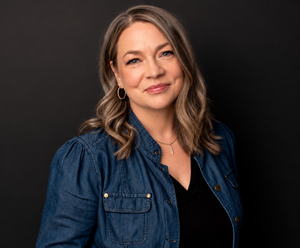
I was fifteen when I began to understand just how permanent death really is. By the time I was seventeen, I had lost three men who were incredibly important to me. Three different deaths, three different circumstances, and three very different experiences of grief. At the time, I had no idea how much those years might influence the person I would become, or how my understanding of those losses would continue to evolve throughout my life.
Over the decades that followed, there would be many more losses. Some sudden and unexpected, others anticipated, some traumatic, and some accompanied by moments of extraordinary tenderness. I've lost people I adored, babies I desperately wanted, and animals whose relatively short lives left enormous spaces behind. I've witnessed death, cared for people approaching the end of their lives, and experienced the helplessness of knowing there was nothing more I could do to change what was happening. Every experience was different, as individual as the person I was grieving and the relationship we shared.
Yet grief isn't confined to the death of someone we love. There are losses throughout our lives that we don't always recognize as grief. The relationships that never became what we imagined, the changes to our bodies, the children who grow up and no longer need us in quite the same way, the friendships and communities that disappear, and the dreams or opportunities that quietly slip beyond our reach. Sometimes we grieve something we once had, and sometimes we grieve something we hoped for but never experienced. Not every loss comes with a funeral, sympathy cards, or even an acknowledgment that something important has happened.
I grew up in a generation familiar with expressions like "suck it up," "be strong," "don't dwell on it," and "you'll be fine." We learned to carry on, and for many of us, that meant continuing to raise our children, go to work, maintain our homes, and meet the expectations and responsibilities of everyday life, regardless of what we were experiencing emotionally. Sometimes that ability to carry on served us well. Other times, I wonder whether we became so accustomed to putting our feelings aside that we stopped recognizing what we were actually experiencing.
Today, there is considerably more conversation about emotional well-being, trauma, grief, and the importance of expressing our feelings. I think that is a meaningful change, although I also wonder whether having the language to describe grief necessarily means having the time, support, or opportunity to experience it. I'm particularly interested in the differences between generations, what we learned from those who came before us, and how those lessons may still be influencing the way we approach loss today.
Now, at sixty, I find myself looking back over a lifetime of experiences and beginning to question things I hadn't previously considered. How have these losses influenced the way I think, love, trust, make decisions, or anticipate the future? What happens to our minds and bodies when we spend years adapting to difficult experiences? Which beliefs and behaviours helped us through those times, and which might still be influencing us long after the circumstances have passed?
Through this personal series, I want to explore grief and loss as I've experienced them, beginning in childhood and continuing through motherhood, relationships, aging, and the many changes that accompany a lifetime. There will be stories of sadness and heartbreak, certainly, but also love, laughter, unexpected connections, and memories of people whose lives meant so much more than the circumstances of their deaths. I want to explore not only what I've lost, but what those experiences taught me, how I understood them at the time, and whether I see them differently today.
I don't pretend to have all the answers. Some experiences have brought me comfort or understanding over time, while others still leave me with questions decades later. I don't believe that every loss needs to become a lesson, that grief follows a predictable path, or that we should be expected to find something positive in every painful experience. Sometimes things happen that simply change us, and it may take years before we recognize how.
Perhaps one of the more interesting aspects of reaching midlife is having enough years behind us to begin recognizing connections we couldn't see while we were busy living through them. I wonder how many of us have become exceptionally good at carrying on, without ever really considering what we've been carrying on from.
There may be a difference between learning to live with something and having the opportunity to truly come to terms with it. At this stage of my life, I think that's a distinction worth exploring.
A note about this series: Some reflections will include sensitive subjects such as infant and pregnancy loss, suicide, death, and difficult medical experiences. I'll include a brief content note with individual posts when appropriate.
Let the love, grace and compassion you give always include you.
~Deb